
Sun Tzu:
The Art of War Decoded
The strategic world Sun Tzu mapped out — a world where most “battles” aren’t fought with force, but with awareness.
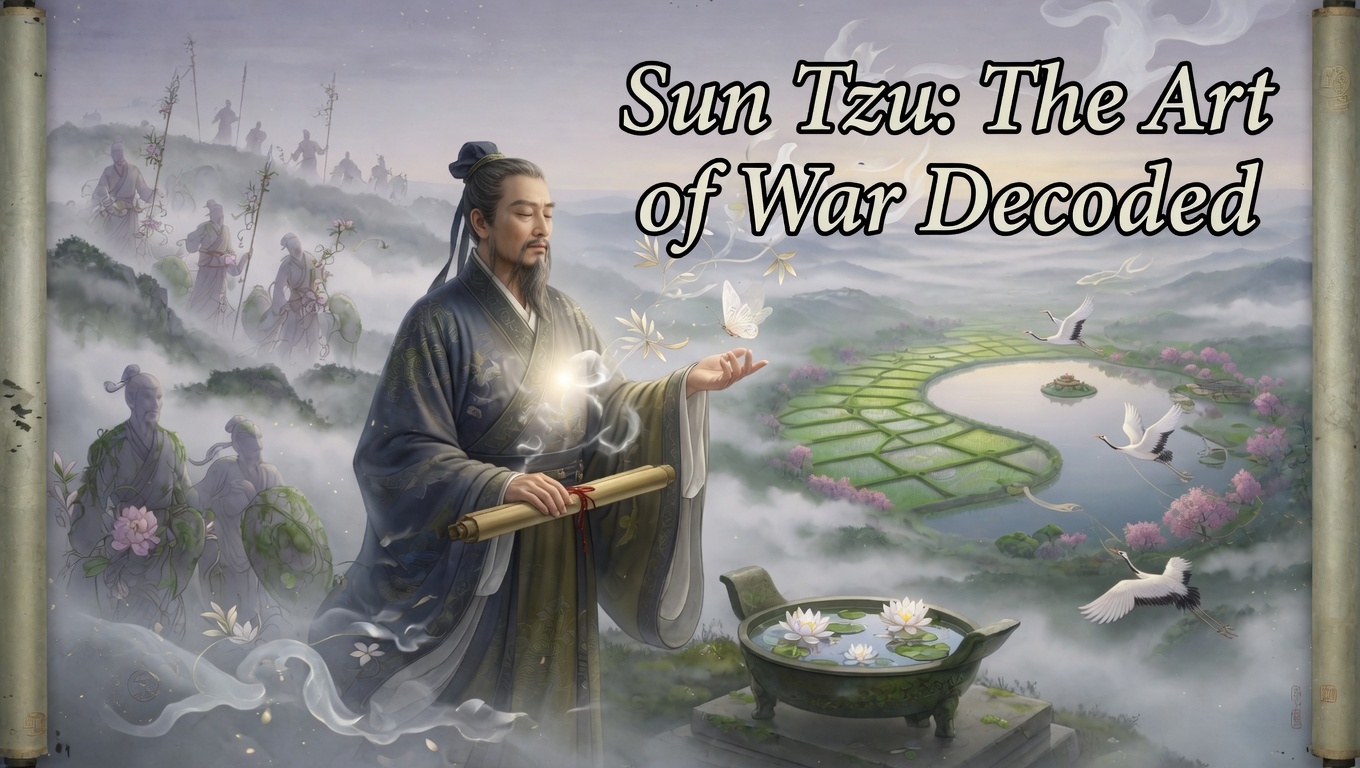
There’s a reason The Art of War survived thousands of years. Not because most of us are fighting battles, but because all of us are navigating terrain.
Sun Tzu understood something deeper than strategy. He understood systems — the emotional landscapes, human patterns, and invisible forces that shape outcomes long before action begins. War was just the metaphor. The real subject was clarity.
He believed the greatest victories happen before the moment arrives. Not through force, but through positioning. Not through aggression, but through understanding. Not through domination, but through alignment with the environment you’re standing in.
In everyday life, this plays out in ways we rarely notice.
You walk into a room and feel the tension before anyone speaks. You sense when a conversation is safe and when it isn’t. You know when someone is hiding their intent. You know when the timing is wrong, even if the opportunity looks perfect on paper.
Sun Tzu would say: You’re not reading people. You’re reading terrain.
He taught that the environment is always speaking — through energy, posture, silence, momentum. And the person who listens wins without conflict, because they move with the system instead of against it.
In modern life, this means understanding the emotional climate of your relationships, your workplace, your friendships, your decisions. It means recognizing when a situation is unwinnable not because you’re weak, but because the terrain is wrong. It means knowing when to advance, when to wait, and when to walk away entirely.
Sun Tzu believed the highest form of skill was avoiding battles that drain your life. Not out of fear, but out of intelligence.
He understood that most losses come from forcing something that isn’t aligned — pushing into resistance, arguing with instability, trying to control what was never yours to control. He would say the moment you feel yourself straining, you’re already off the path.
Victory, in his world, wasn’t about overpowering others. It was about creating conditions where the outcome becomes effortless — where the environment does the work for you.
In everyday life, this looks like choosing conversations when the other person is open, not defensive. Choosing projects when your energy is high, not depleted. Choosing relationships where clarity flows, not where confusion grows. Choosing environments that support your direction instead of scattering it.
Sun Tzu believed that clarity is a weapon. Not the sharp kind — the quiet kind. The kind that lets you see the entire field while others are trapped in the moment.
He taught that the person who understands themselves and understands the environment cannot be surprised. Because they’re not reacting — they’re reading. They’re not fighting — they’re positioning. They’re not forcing — they’re aligning.
And when you live this way, life stops feeling like a series of battles. It becomes a series of openings.
You stop wasting energy on the wrong terrain. You stop engaging with people who thrive on conflict. You stop pushing into situations that drain you. You stop mistaking motion for progress.
You start moving with intention. You start choosing your timing. You start recognizing the difference between resistance and redirection. You start seeing the path that was always there — the one that requires less force and more awareness.
Sun Tzu’s real message wasn’t about war. It was about moving through life with precision instead of pressure. About understanding the system before you step into it. About choosing environments that match your direction. About winning without fighting because you finally understand the terrain beneath your feet.
This is the Art of War. Not as conflict, but as clarity.
Continue the theory
A new layer opens here soon.